Friday, August 7, 2015

Gnome-Hunting

This is a partial reprint of a previous blog from my old site, but this activity continues to be fun the more I learn (and has taught me a lot on him to adjust the AV setting on my camera).  Plus, new photos!  So grab a Peterson Field Guide to mushrooms if you've got one and get outside!

Emetic russula


It's the new after-storm sport!  After a lot of rain – be it rain storm, tropical storm, or hurricane– come the mushrooms.  Make a family activity of it and bring your camera. Go in the back yard, in the woods or a field, and keep your gaze low to the ground.  (Mushrooms also grow on dead and dying trees, of course, but it's the ground-dwellers that appear out of nowhere that we look for now.  Call it "gnome-hunting" if you want.)

This activity serves three purposes: Time with the family (that doesn't require electricity aside from the batteries in your camera and flashlight), exercise, and learning to identify mushrooms.  Most mushrooms are poisonous and your first foray into their unknown world should be cautious and respectful.  Don't touch mushrooms with bare hands or taste them.  Wear long pants.  Bring insect repellent.  (Lavender and feverfew are natural insect repellents and can be rubbed on clothing and hair.  Never use insect repellent with deet on pets or small children.  Do not use feverfew or pyrethrin-containing products on cats.)  Take lots of pictures and note when (month) and where (log, ground, field, sun, shade, etc.) you found the mushroom.  Note stem and cap sizes, gills, spore color, or other distinctive characteristics.   Bring a flashlight if you're in a dark area.

I am by far NOT an expert in mushrooms, but I am starting to learn about edible ones.  Misidentification can lead to severe illness and death.  Do not eat wild mushrooms unless you have a positive identification from a trained guide (mycologist), the mushroom is not spoiled, and the mushroom has been cooked!  One Asian family, gathering mushrooms in the U.S. that looked like the edible ones from their homeland, all died.  Another family in Mexico bought wild mushrooms at a Farmer's Market that were misidentified and also died.  Alcohol intensifies the effects of toxins.  Then there's simple allergy.  I don't mean to scare people, but foraging of this sort should not be taken lightly.  For help with identification and symptoms of poisoning, check here.  It's fun just finding mushrooms and trying to identify them.

Here are some photos of specimens I found in Chepachet:

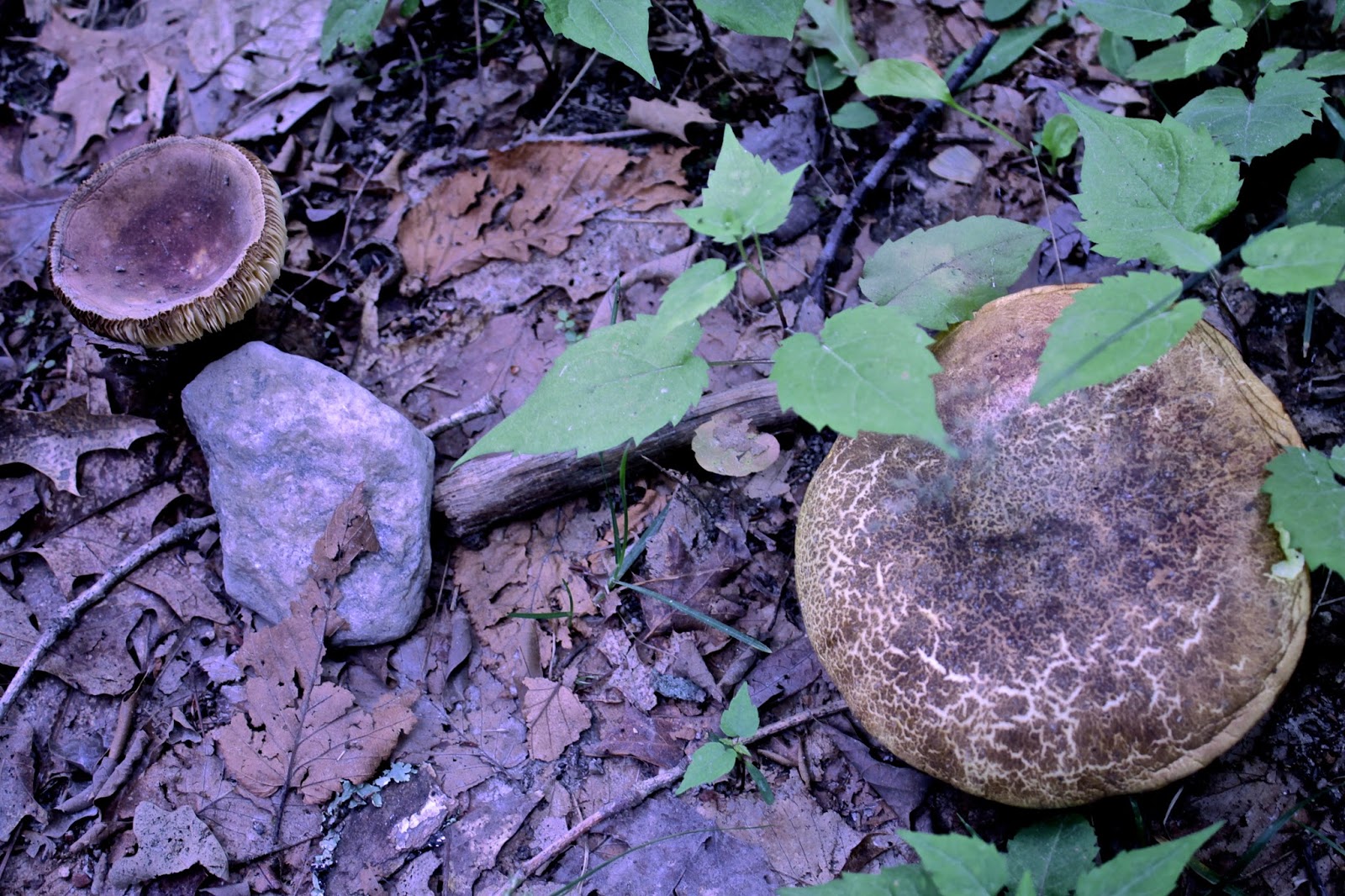
bracket fungus?
bolete?


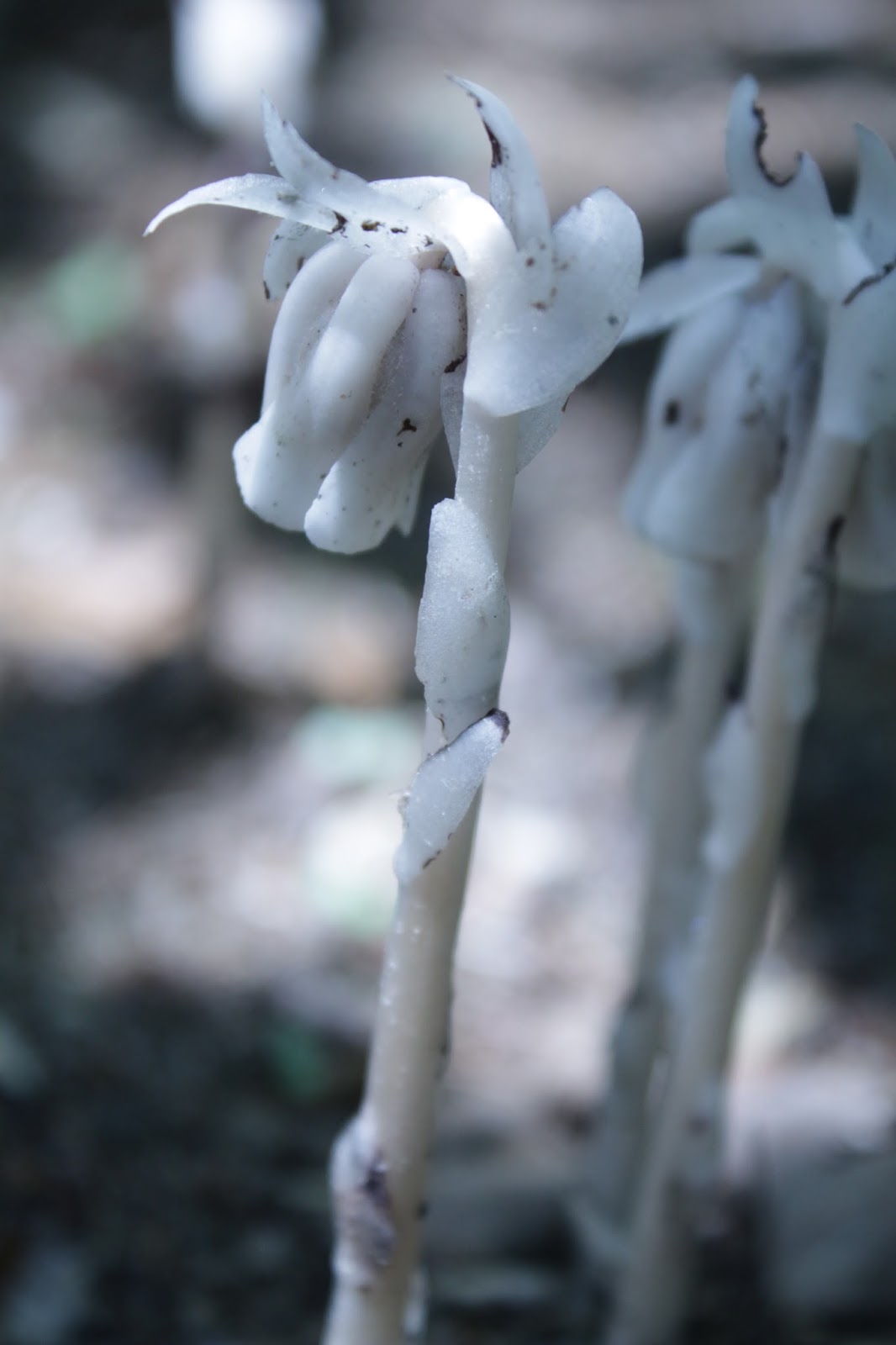
Not a fungus or mushroom, but a plant
that does not have chlorophyl called "Indian pipe".


Is this how a gnome flips his home?  Next to sassafras.


Buddies!
Pacman!!!!!!


Curiouser and curiouser...
A bit stuck up?


russula again?


Sunday, July 26, 2015

The Big Butterfly Count!

July 17th to August 9th is The Big Butterfly Count!  Sign up at this link and record your findings as a citizen scientist: The Big Butterfly Count.  It only takes 15 minutes, making it an ideal "15 Minute Field Trip™".  Simply go outside, preferably on a sunny day, and identify and count butterflies.  This guide will help you, as well as the Bug Guide and Peterson Field Guides.  Remember, butterflies are nectarivores, so look in areas with plenty of flowers.  Some great butterfly attractors include bee balm, black-eyed susans, butterfly bush, butterfly weed, coneflower, lavender, liatris, milkweed, oregano, phlox, and yarrow.  Group plants in clusters for best success.  Butterflies are especially found of red, orange, and yellow flowers with umbrels.  Look up a particular favorite's host plant.  For instance, Monarchs only lay eggs on milkweed.  Here are six ways you can save the Monarchs.  Swallowtails lay eggs on members of the carrot family: carrot, dill, fennel, parsnip, and Queen Anne's lace.  All butterflies will benefit from a puddling, or drinking area. Fill a shallow dish with sands an pebbles and keep wet.  Butterflies will drink from it and males will get minerals from the pebbles to aid their fertility.

Frittilary on coneflower.

Monarch adult and caterpillars on milkweed.

Painted lady on oregano.

Eastern pine elfin hairstreak????

Painted lady on allium.

Skippers????
All photos © Melissa Guillet

Sunday, March 22, 2015

Packaging


It was one of those BIG shopping trips, where I was tired of running around and just wanted to get the house stocked up.  I had coupons.  I had gift cards.  I had my reusable shopping bags.

Dairy: 1/2 gallon Rhody Fresh milk
           1 lb. Cabot unsalted butter
           16 oz heavy cream (for quiche and whip cream - no can!)
           Philly neufchâtel

Meat/Deli: 1/2 lb. Lacey Swiss
                  1/2 lb. Black Forest ham
                  2 lbs. Cod
                  2 cans albacore tuna
                  2 cans beans

Fruit/Veggie: Tropicana OJ
                      Fresh salsa
                      1.9 lbs. bananas
                      2 lbs. butternut squash
                      1.73 lbs. sweet potatoes
                      2 lbs. onion
                      1 cucumber
                      .7 lbs. green beans
                      2 bags kale
                      1 grapefruit
                      1 lemon
                      1 pt. grape tomatoes
                      1 pack baby bellas

Frozen: 3 boxes pierogies
             2 pints Ben & Jerry's

Grocery: Pomi boxed tomatoes (no plastic-lined can!)
               Jar of pasta sauce
               6 boxes Annie's mac and cheese
               2 cases of seltzer
               6 pack Ginger beer
               box of coconut milk
               Bag of bird food
               2 spinach feta tasca (prepared food)

All for a total of $154.93 at Stop & Shop, food for three for about two weeks.  Now let me analyze it for waste:

Glass: Seven (pasta sauce, six bottles)
Aluminum/Steel: 30 (cans of food and seltzer)
Cardboard: 21, including cartons, boxed tomatoes, ice cream pints
#1/2 Plastic: Four (tomatoes, mushrooms, fresh salsa, prepared food)
#5 Plastic: None (would include yogurt containers)
Plastic bag packaging: Four (bird food, deli meat, deli cheese, bag around fish.  All produce except mushrooms bought without bags.  I used reusable mesh bag for green beans.)

Not too bad.  Mushrooms get me every time.  I could buy them at the farmer's market and bring my own mesh bag.  They bruise too easily to travel to supermarkets.  I could make my own salsa next time to avoid the plastic.  I did recycle all the containers, but just the production of such containers causes pollution.  Aluminum can be collected, melted, and reproduced as cans in 90 days, so no guilt recycling those.  It takes far less energy and natural resources than, say, digging up a mountain fir virgin ore.  I don't get deli meat and cheese every week, but I don't usually reuse the zip-lock bags either...  Bird food purchases just started this past (harsh) winter and I wonder if there are paper bag versions that I can get locally.  Maybe the farm store.  Recycled my glass too, but our state does not have it's own glass recycling plant and until recently just ground it up as layers in the landfill.  (Starting in early 2013, glass has been shipped out to MA for recycling. Eco-RI)  Here's a petition to create a glass recycling center in Rhode Island (where our local Narragansett beer is also bottled out-of-state), creating jobs and perhaps leading to a bottling plant as well: http://petitions.moveon.org/sign/recycle-glass-in-rhode?source=c.em.cp&r_by=2175639

On another shopping trip (pictured above), I spent $64 at Dave's and $21 at Target getting everything you see there.  (My daughter wanted her doll in the picture.)  This included:

Dairy: 1/2 gallon Rhody Fresh milk
           2 Stonyfield yogurts (larger volume means less packaging)
           1 yogurt snack pack my daughter begged for

Meat/Deli: 1/2 lb. Lacey Swiss
                  1/2 lb. Black Forest ham
                  1 dozen Stamp Farm eggs
                  can of black beans
                  can of chick peas
                  can of refried beans
                  stuffies (foil and plastic package)
                  andouille sausage (plastic!)

Fruit/Veggie: bananas                    
                      2 locally-grown tomatoes
                      swiss chard
                      carrots
                      3 onions
                      garlic
                      lemon
                      2 bags kale
                      canned olives
                      3 jars salsa

Frozen: none

Grocery: Spices (sesame seeds, cream of tartar, dried dill)
               small jar of mayo (I've made my own, but the recipe makes much more than I can use            
                    before it separates)
               tomato paste (box and foil tube)
               two bags coffee
               one GLASS bottle of Dave's coffee syrup (again, my kid begged, and Autocrat was plastic    
                    and had HFCS.  Yuck!)
              loaf of rye (plastic bag!)
              boxed chicken stock
              4 boxes Annie's mac and cheese
              1 box Annie's snack mix
              3 boxes cereal
              bag of chips
              bag of rice

That's a lot of food for $85.  6 Aluminum, 6 glass, 12 cardboard, 3 #5 plastic, 3 #2 plastic, 8 plastic bags (andouille sausage, deli cheese, deli meat, potato chips, bread, rice, 2 kale bags).  I do reuse the spice jars and sort my nature craft collection in glass jars to easily see them (mostly dried seeds and pods).  The bagged kale wasn't worth it.  It was pre-chopped for juicing and after 15 minutes juicing half a bag, I had 1/2 a cup of "juice'.  I would rather buy a whole kale I can chop finely for salad and rice dishes.  I did notice that Dave's has 8 oz. of Cabot cheese in wax paper MUCH cheaper than 8 oz. of shredded, preservative-laden cheese in the further aisle, so I know what I'll be staying with now.

Next trip: Whole Foods and the search for less packaging.

Friday, March 20, 2015

Back to Blogging!!!

Milk cartons repurposed for growing herbs and lettuce.


Hello Readers!

Some of you may have seen my previous blog, www.aroundtheworldin100miles.blogspot.com.  I let it go too long and my log-on email got recycled, so here is its triumphant rebirth!  I'll be posting recipes again, there will be a fundraiser to publish the cookbook in late summer, and of course, I'll be blogging about my successes and failures living an eco-friendly life.

Melissa Guillet